SSI Payment September 1, 2026 New York: Complete Guide
Quick Answer
Yes, Supplemental Security Income (SSI) recipients in New York will receive their September 2026 payment on Tuesday, September 1, 2026. The maximum Federal Benefit Rate (FBR) for an individual is $994, $1,491 for an eligible couple, and up to $498 for an essential person. This is a standard monthly SSI payment for September, with no holiday or weekend adjustments affecting the date.
Age 65+, blind, or disabled with limited income and resources
Income Limits
Varies; generally under $2,010/month for individuals, $3,015 for couples (2026)
Monthly Benefit
Individual: up to $994; Couple: up to $1,491; Essential Person: up to $498
Application
Online at ssa.gov, by phone 1-800-772-1213, or in-person at local SSA office
Processing Time
3-6 months typically; applications accepted up to 3 months before eligibility begins
Renewal
Periodic redetermination of eligibility by SSA
Available States
All 50 states, District of Columbia, and Northern Mariana Islands
Last Updated
August 2026
September 2026 SSI Payment Schedule
SSI payments are generally issued on the first day of every month. Since September 1, 2026, falls on a Tuesday, a regular business day, the payment will be sent on its scheduled date with no adjustment.
Complete SSI Payment Calendar for 2026
Month
Payment Date
Notes
January
January 1, 2026
Regular payment
February
January 30, 2026
February payment advanced (Feb 1 is Sunday)
March
No SSI payment
Payment made January 30
April
April 1, 2026
Regular payment
May
May 1, 2026
Regular payment
June
June 1, 2026
Regular payment
July
July 1, 2026
Regular payment
August
July 31, 2026
August payment advanced (Aug 1 is Saturday)
September
September 1, 2026
Regular payment
October
October 1, 2026
Regular payment
November
October 30, 2026
November payment advanced (Nov 1 is Sunday)
December
December 1, 2026
Regular payment
January 2027
December 31, 2026
January 2027 payment advanced (Jan 1 is holiday)
Important Rule: When the first of the month falls on a weekend or federal holiday, the SSA advances the SSI payment to the last business day of the previous month. This is why some months have two payments and others have none – but beneficiaries never lose money.
What Is SSI?
Supplemental Security Income (SSI) is a federal income supplement program administered by the Social Security Administration. It is designed to help aged, blind, and disabled people who have little or no income and resources.
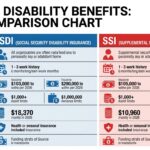
SSI is not the same as Social Security retirement or Social Security Disability Insurance (SSDI). While both are administered by the SSA, they are distinct programs with different eligibility rules:
Feature
SSI
Social Security (Retirement/SSDI)
Funding
General tax revenues
Social Security trust funds
Eligibility Based On
Financial need
Work history (or family member’s work history)
Benefit Amount
Maximum $994 (2026)
Varies based on lifetime earnings
COLA Applied
Yes, 2.8% increase for 2026
Yes, 2.8% increase for 2026
SSI provides a basic monthly check to help cover the costs of food, clothing, and shelter for those who qualify.
Who Qualifies for SSI in New York?
Who Qualifies
To be eligible for SSI in New York, you must meet all of the following requirements:
Age or Disability:
Age 65 or older with limited income and resources, OR
Blind (meeting SSA’s definition of blindness), OR
Disabled (meeting SSA’s definition of disability for adults or children)
Financial:
Limited income from all sources (wages, pensions, Social Security, other benefits)
A noncitizen in a qualifying immigration category authorized by the Department of Homeland Security
Residency:
Must reside in one of the 50 states, the District of Columbia, or the Northern Mariana Islands
New York residents must live in New York State at the time of application
Absence Rule:
Cannot be outside the U.S. for a full calendar month or for 30 consecutive days if they wish to maintain eligibility
Who Does NOT Qualify
Individuals under age 65 who are not blind or disabled
Individuals with income or resources above SSA limits
Noncitizens who do not meet SSA’s qualifying immigration categories
Individuals living outside the United States for a full calendar month
Individuals who do not apply or who do not complete the application process
Individuals who fail to cooperate with SSA’s requests for information
Income and Resource Limits
Income Limits
SSI considers countable income – not all income is counted. General rules:
Individuals: Monthly countable income must generally be below $2,010 (2026) to qualify for some benefit
Couples: Monthly countable income must generally be below $3,015 (2026) to qualify for some benefit
What Counts as Income
Income Type
Examples
How It’s Treated
Earned income
Wages, self-employment
Partially excluded; first $65/month plus half the remainder excluded
Unearned income
Social Security, pensions, SSDI, interest
Mostly counted; first $20/month excluded
In-kind support
Free food, shelter, utilities
Counted as income (unless exceptions apply)
Gifts
Money from family or friends
Counted as unearned income
Asset (Resource) Limits
Applicant Type
Resource Limit
Individual
$2,000
Couple
$3,000
Essential Person
Additional $2,000
What Counts as Resources
Counted Resources:
Cash in bank accounts
Stocks and bonds
Real estate (other than primary home)
Vehicles (beyond one vehicle)
Excluded Resources:
Primary home (one house and land)
One vehicle (regardless of value)
Household goods and personal effects
Burial plots and burial funds up to $1,500
Life insurance policies (face value $1,500 or less)
Up to $100,000 in ABLE accounts (for individuals disabled before age 26)
Income Examples: Do They Qualify?
Example 1: Elderly New Yorker with Small Pension
Situation: Anna, 68, lives alone in Brooklyn. She receives $1,200/month from a small pension and has $1,500 in savings. She has no other income.
Age requirement: ✓ (Age 68)
Income limit: $1,200 < $2,010 ✓
Resource limit: $1,500 < $2,000 ✓
Result: Qualifies. Anna’s SSI benefit would be $994 minus countable income, likely around $700-$800/month.
Example 2: Disabled Worker with SSDI
Situation: Michael, 52, is disabled and receives $1,800/month in SSDI. He has $3,500 in a bank account.
Disability requirement: ✓
Income limit: $1,800 < $2,010 ✓
Resource limit: $3,500 > $2,000 ✗
Result: Does NOT qualify. Michael exceeds the $2,000 resource limit. He would need to spend down his resources to $2,000 or less before being eligible.
Example 3: Married Couple with Social Security
Situation: James and Maria, both 70, receive $2,800/month combined from Social Security retirement. They have $1,000 in savings and own their home.
Age requirement: ✓
Income limit: $2,800 < $3,015 ✓
Resource limit: $1,000 < $3,000 ✓
Result: Qualifies. James and Maria would receive the difference between the federal benefit rate ($1,491 for couples) and their countable income.
Example 4: Disabled Child
Situation: Sarah, 12, has a qualifying disability. Her parents have income of $5,000/month.
Disability requirement: ✓
Income limit: Deeming rules apply; parental income may disqualify the child if household income is too high
Result: Likely does NOT qualify due to parental income exceeding limits. Children’s eligibility considers parental income and resources.
State Differences: New York vs. Other States
New York SSI State Supplement
New York provides a state supplement to SSI, increasing monthly benefits above the federal rate for many recipients. The supplement varies by living arrangement.
Estimated New York Supplemental Payments for 2026:
If you appeal within 10 days of receiving notice that benefits are being stopped, you can request to continue receiving benefits during the appeal process
You may have to repay any benefits if you lose the appeal
Common Mistakes in SSI Applications
Not applying when you become disabled – Apply as soon as you become disabled
Underreporting income – Report all income; SSA will find out anyway
Not reporting resources correctly – Account for bank accounts, property, vehicles
Missing medical appointments – Attend all SSA-requested medical exams
Failing to keep SSA updated – Report changes in income, address, or living situation within 10 days
Not providing medical evidence – Submit all medical records
Thinking you don’t qualify – Apply anyway; many who think they won’t qualify actually do
Losing important paperwork – Keep copies of everything
Giving up if denied – Appeal – many denials are overturned on appeal
Not checking your payment date – Know when the check is coming to avoid confusion
Recent Changes to SSI (2026)
Cost-of-Living Adjustment (COLA) 2026
COLA increase of 2.8% effective January 2026
This is what raised the maximum SSI benefit to $994 for individuals
The increase applies to all Social Security and SSI benefits
New Payment Method Requirements
SSA is phasing out paper checks
Recipients must receive payments via Direct Deposit or Direct Express debit card
This is part of a government-wide effort to modernize payment systems
COFA Resident Eligibility
Individuals residing in the U.S. under a Compact of Free Association (COFA) agreement may qualify for SSI
COFA residents include citizens of the Marshall Islands, Micronesia, and Palau
Frequently Asked Questions
1. When will I get my September 2026 SSI payment in New York?
SSI recipients in New York will receive their September 2026 payment on Tuesday, September 1, 2026. This is the regular payment date because September 1 is a business day and not a holiday or weekend.
2. How much is the maximum SSI payment in September 2026?
The maximum monthly SSI benefit for an individual is $994, for an eligible couple is $1,491, and for an essential person is $498 in 2026. However, actual benefits may be lower depending on your income and living situation.
3. Is SSI the same as Social Security retirement?
No, SSI is a different program. SSI is needs-based and funded by general tax revenues, while Social Security retirement is based on work history and funded by Social Security taxes. Many people receive both benefits if they qualify for both.
4. Can I get SSI if I live in New York and have a bank account?
Yes, but your bank account balance counts as a resource. The limit is $2,000 for an individual and $3,000 for a couple. If your account exceeds these limits, you may not qualify unless you spend down the funds.
5. Can noncitizens get SSI in New York?
Yes, but only certain categories of noncitizens qualify. You must be a U.S. citizen or a noncitizen in a qualifying category authorized by the Department of Homeland Security. Undocumented immigrants generally do not qualify for SSI.
6. What happens if I leave the U.S. while receiving SSI?
You generally cannot receive SSI for any month in which you are outside the United States for an entire calendar month or for 30 consecutive days. If you travel outside the U.S., report it to SSA to avoid overpayment issues.
7. Can I get SSI if I’m receiving unemployment benefits?
Maybe. Unemployment benefits count as unearned income and will reduce your SSI benefit. If your unemployment income is high enough, you may not qualify at all. You must report unemployment benefits to SSA.
8. Can children get SSI in New York?
Yes, children under 18 can qualify for SSI if they have a qualifying disability and the household meets income and resource limits. Parental income and resources are considered through a process called “deeming”.
9. Does New York add extra money to SSI?
Yes, New York State provides a state supplement to SSI recipients. The amount varies by living arrangement, with individuals living alone receiving approximately $87-$108 per month in additional benefits from the New York State Supplement Program (SSP).
10. How often do I need to renew SSI benefits?
SSA performs periodic redeterminations of eligibility. Most recipients are reviewed every 1 to 3 years. You must respond to SSA requests for information during these reviews to keep receiving benefits.
11. What if my September 2026 SSI payment doesn’t arrive?
If your payment doesn’t arrive on September 1, wait one business day, then contact your bank or Direct Express to check if the deposit is pending. If it hasn’t arrived by September 2, call the SSA at 1-800-772-1213. You can also check your payment status at ssa.gov or by using the SSA mobile app.
12. Are there other benefits I can get with SSI in New York?
Yes. SSI recipients in New York are often eligible for automatic or facilitated enrollment in other programs:
Medicaid (New York State Medicaid)
Food Stamps (SNAP/CalFresh) – though New York calls it SNAP
Low-Income Home Energy Assistance Program (LIHEAP)
Medicaid (New York State Health Insurance) – Free or low-cost health coverage for low-income individuals, including SSI recipients. New York offers Medicaid to SSI recipients automatically in many cases.
SNAP (Food Stamps) – Monthly food benefits for low-income households. SSI recipients often qualify for expedited SNAP processing.
New York State Supplement Program (SSP) – Additional monthly cash payments for SSI recipients in New York living arrangements.
Section 8 Housing Choice Voucher – Federal rental assistance for low-income families, seniors, and disabled individuals.
Earned Income Tax Credit (EITC) – Federal tax credit for low-to-moderate income working individuals and families.
Social Security Death Benefit – One-time payment to surviving spouses and dependent children of Social Security beneficiaries.
Veterans Disability Compensation – Tax-free monthly benefits for veterans with service-connected disabilities.
TANF (Temporary Assistance for Needy Families) – In New York, this is called Family Assistance, offering cash aid to low-income families with children.
Key Takeaways
SSI recipients in New York will receive their September 2026 payment on Tuesday, September 1, 2026.
The maximum Federal Benefit Rate for an individual is $994, a couple is $1,491, and an essential person is $498.
SSI is a needs-based program for aged, blind, and disabled individuals with limited income and resources.
New York State provides a supplement to SSI, increasing total benefits by approximately $87-$108 per month for individuals living alone.
SSI and Social Security retirement/SSDI are different programs with different eligibility rules.
The 2.8% COLA increase effective January 2026 raised the maximum SSI benefit to $994.
Payment dates are adjusted when the first of the month falls on a weekend or holiday.
You can apply online at ssa.gov, by phone, or in person at a local SSA office.
Processing time is typically 3-6 months; apply early if you anticipate needing benefits.
Redetermination (renewal) is required periodically to maintain eligibility.
Supplemental Security Income 2026 Schedule: Complete Guide to Payment Dates, Amounts & Eligibility In 2026, SSI payments go out on the first of each month, except when that date falls on a weekend or federal holiday — then you get paid the prior business day. The maximum federal SSI benefit is $994 per month for…
Introduction to Guaranteed Income Support (GIS) Guaranteed Income Support (GIS) is a vital component of Canada’s social safety net, specifically designed to assist low-income seniors. It is a monthly non-taxable benefit that enhances the financial security of eligible individuals, ensuring they can maintain a basic standard of living in their retirement years. The GIS program…