Table of contents SSI Payment Date September 2026: When You Get Your Check Quick Answer Quick Facts What Is This Program? Who Qualifies? Income LimitsAsset Limits Household Requirements Citizenship Rules Immigration Eligibility State Differences Required Documents How to Apply Online Application Processing Time Payment Schedule Renewal Process Reasons Applications Are Denied Appeals Process Common…
Table of contents
SSI Payment Date September 2026: When You Get Your Check
Quick Answer
The Supplemental Security Income (SSI) payment for September 2026 will be issued on Tuesday, September 1, 2026. This is a standard first-of-the-month payment date because September 1 falls on a regular business day (Tuesday). If you are currently receiving SSI benefits, your payment will arrive on this date. If you receive both SSI and Social Security benefits, your SSI payment arrives on September 1, while your Social Security payment follows a separate schedule based on your birthday.
Aged 65+, blind, or disabled individuals with limited income and resources
Income Limits
Generally, countable income must be below the Federal Benefit Rate (approximately $967/month for individuals)
Monthly Benefit
Up to approximately $967 for individuals, $1,450 for couples (2026 rates)
Application
Online at SSA.gov, by phone, or in-person at local SSA office
Processing Time
Typically 3 to 6 weeks for initial claims
Renewal
Periodic redetermination reviews by SSA
Available States
All 50 states, District of Columbia, and U.S. territories
Last Updated
September 2026
What Is This Program?
Supplemental Security Income (SSI) is a federal income supplement program administered by the Social Security Administration (SSA). It provides monthly cash assistance to individuals who are aged 65 or older, blind, or have a qualifying disability—and who have limited income and financial resources.
SSI is not the same as Social Security retirement benefits. While Social Security is based on your work history and the taxes you paid into the system, SSI is a needs-based program. It is funded by general tax revenues, not the Social Security trust fund. This means you can qualify for SSI even if you have never worked or paid Social Security taxes.
The program exists to ensure that the most vulnerable Americans—seniors, people with disabilities, and those who are blind—have a basic minimum income to cover essential living expenses like food, clothing, and shelter.
Who Qualifies?
Who qualifies:
Adults aged 65 or older who have limited income and resources
Adults under 65 with a qualifying disability that prevents them from working
Children under 18 with a qualifying disability (or under 22 if still attending school regularly)
People who are blind, regardless of age
U.S. citizens and certain qualified non-citizens
Residents of the 50 states, District of Columbia, or the Northern Mariana Islands
Who does NOT qualify:
Individuals who are not citizens and do not meet the SSA’s strict non-citizen eligibility requirements
People who have excess income above the SSA’s limits
Individuals with countable resources above $2,000 (individual) or $3,000 (couple)
Residents of institutions (like prisons or hospitals) for most of the month
People who are not residents of the United States
Individuals who refuse to apply for other benefits they may be eligible for (like pensions)
Common exceptions:
Some students under age 22 may qualify even if they live away from home
Certain Native American tribal members may have specific income exclusions
Blind individuals have higher income exclusions for earnings
Children with disabilities may qualify even if their parents have higher income, depending on the circumstances
Income Limits
For SSI, income limits are based on countable income, not your total gross income. Countable income includes:
Wages and self-employment earnings
Social Security benefits
Pensions and annuities
Workers’ compensation
Unemployment benefits
Free shelter or food received
2026 income thresholds (estimated, based on 2025 rates adjusted for COLA):
Individual: Countable income must generally be below approximately $967 per month
Couple: Countable income must generally be below approximately $1,450 per month
Important note: The SSA excludes certain income from counting, including:
The first $65 of earned income plus half of remaining earnings
Food stamps (SNAP)
Most state assistance
Some scholarships and grants for students
Certain housing assistance
Example: Sarah, a single adult with a disability, works part-time earning $500 per month. The SSA would exclude the first $65, then count half of the remaining $435 ($217.50). Her countable earned income would be $217.50, which is below the limit, so she may still qualify for SSI.
Asset Limits
SSI also has strict resource (asset) limits. Countable resources include:
Individual: Countable resources must be $2,000 or less
Couple: Countable resources must be $3,000 or less
What does NOT count:
Your primary home and the land it sits on
One vehicle (regardless of value, generally)
Household goods and personal effects
Up to $1,500 in burial funds
Life insurance policies with a face value of $1,500 or less
Example: Robert, a 70-year-old retiree, owns his home (value not counted) and has $1,800 in his checking account. He also has a second car worth $4,000 (counted). His countable resources exceed the $2,000 limit, so he would not qualify for SSI until he reduces his assets.
Household Requirements
SSI considers household composition when determining eligibility and benefit amounts. Your household includes:
Yourself
Your spouse (if married and living together)
Children under 18 (if living with you)
Parents (if you are a child under 18)
Living arrangements affect benefits:
Living alone → Full benefit
Living with a non-disabled spouse → Benefits may be reduced based on spouse’s income
Living with parents (child under 18) → Parental income is deemed to the child
Living in a group home → Benefits may be reduced by up to one-third
Who counts in your household for income deeming:
Spouses → Income and resources are combined
Parents (for minor children) → A portion of parental income is deemed to the child
Sponsors (for immigrants) → A portion of sponsor’s income is counted
Citizenship Rules
To receive SSI, you must be a:
U.S. citizen, or
Qualified non-citizen meeting specific criteria
U.S. citizens generally have no additional citizenship-related barriers beyond meeting financial and medical eligibility.
Qualified non-citizens must meet strict conditions, including:
Entered the U.S. before August 22, 1996, and
Receiving SSI benefits as of that date, or
Have 40 qualifying quarters of work (from themselves, a spouse, or a parent), or
Are active duty military or a veteran, or the spouse/child of a veteran, or
Are admitted as a refugee, asylee, or Cuban/Haitian entrant, or
Are victims of human trafficking, or
Are Native Americans born outside the U.S.
Important: Many non-citizens are not eligible for SSI, even if they have legal immigration status, unless they meet the specific criteria above.
Immigration Eligibility
For immigrants who qualify, there are additional considerations:
Lawful Permanent Residents (Green Card holders) may qualify after meeting the 5-year waiting period (unless exempt)
Refugees and asylees are eligible for up to 7 years from admission
Human trafficking victims may qualify
Some parolees and certain other non-citizens may qualify
What immigrants must understand:
You must have a qualifying immigration status
You must have a valid Social Security number
Sponsor income may be counted against you (the “sponsor deeming” rule)
You must be physically present in the U.S. for at least 1 day of the month
Example: Maria, a refugee admitted to the U.S. in 2024, can apply for SSI immediately without the 5-year waiting period.
State Differences
While SSI is a federal program, some states add supplementary payments to the federal SSI benefit. These are called State Supplementary Payments (SSP) and are administered either by the SSA (on behalf of the state) or by the state itself.
States that generally add supplements:
California
New York
Pennsylvania
Massachusetts
Connecticut
New Jersey
Vermont
Maine
States with significant supplement payments:
California: One of the highest supplements
Alaska: Additional payment
Colorado: Variable based on living situation
Hawaii: Increased due to high cost of living
Note: If you live in a state without a supplement, you receive only the federal benefit amount.
Important: Some states also provide Medicaid coverage automatically upon SSI approval, while others require a separate application.
Required Documents
When applying for SSI, you will need the following documents:
Birth certificate (or other proof of age)
Social Security card or number
Proof of citizenship (passport, naturalization certificate, etc.)
Proof of immigration status (if non-citizen)
Proof of income (pay stubs, benefit letters, tax returns)
Bank account statements (checking and savings)
Proof of assets (vehicle registration, property deeds, insurance policies)
Medical records (for disability or blindness claims)
Names and addresses of your doctors, hospitals, and clinics
W-2s or tax returns from the past year
Marriage certificate (if applicable)
Proof of living arrangements (lease, mortgage, or statement from person you live with)
How to Apply
You can apply for SSI through three methods:
Online: Visit SSA.gov and use the online application portal
By phone: Call 1-800-772-1213 (TTY: 1-800-325-0778)
In person: Visit your local Social Security office (schedule an appointment first)
Step-by-step process:
Gather required documents
Complete the application (online, phone, or in person)
Provide medical records (for disability claims)
Wait for the SSA to contact you for additional information
The SSA makes a determination and sends a notice
When to apply:
Apply as soon as possible after becoming eligible
If you are filing for disability, do not delay—processing can take months
You can apply up to 6 months before you expect to become disabled
Online Application
The easiest way to apply is through the SSA’s online application system.
You may be asked to undergo a consultative examination (paid by SSA)
Processing Time
SSI applications typically take 3 to 6 weeks for initial processing if you meet all eligibility requirements and provide complete documents. However:
Disability claims take much longer—often 3 to 6 months or more—because the SSA must obtain and review medical records and may schedule a consultative examination.
Application processing steps:
Application submitted (Day 0)
Documents reviewed (1-2 weeks)
Medical records requested (if applicable)
Consultative examination (if needed)
Final determination (3-6 weeks or longer for disability)
Rush processing: If you are facing financial hardship (e.g., risk of eviction, no food), you may qualify for expedited processing. Contact SSA to request this.
What to do while waiting:
Keep copies of all documents submitted
Notify SSA of any address changes
Respond promptly to any requests from SSA
Payment Schedule
SSI payments are generally issued on the first day of each month. If the first falls on a weekend or federal holiday, the payment is issued on the last business day before that date.
2026 SSI payment schedule includes:
January: Paid December 31, 2025
February: Paid January 30
March: Paid February 27
April: April 1
May: May 1
June: June 1
July: July 1
August: July 31 (early, because August 1 is a Saturday)
September: September 1 (Tuesday—no adjustment needed)
October: October 1
November: October 30 (early, because November 1 is a Sunday)
December: December 1
January 2027: December 31, 2026
For September 2026 specifically:
SSI beneficiaries → Receive payment on Tuesday, September 1, 2026
Social Security beneficiaries who filed before May 1997 → Receive on Thursday, September 3, 2026
Most Social Security beneficiaries (retirement, survivor, SSDI):
Born 1st-10th → Wednesday, September 9, 2026
Born 11th-20th → Wednesday, September 16, 2026
Born 21st-31st → Wednesday, September 23, 2026
Renewal Process
SSI benefits are not permanent. The SSA periodically reviews your eligibility through a process called redetermination.
What is redetermination?
The SSA reviews your income, resources, and living situation
Conducted every 1 to 6 years, depending on your circumstances
You will receive a notice with the date of the review
What you need to do:
Complete the review form (usually SSA-8202 or SSA-8203)
Provide updated information about income, resources, and living arrangements
Provide proof of any changes
Return the form by the deadline
For disability recipients:
The SSA may conduct Continuing Disability Reviews (CDR)
This determines if your disability still meets the SSA’s definition
Review occurs every 3 to 7 years, depending on severity
Failure to respond to a review request will result in benefits being suspended or terminated.
Reasons Applications Are Denied
Applications can be denied for many reasons. The most common include:
Excess income (earnings above the limit)
Excess resources (assets above $2,000/$3,000)
Medical condition does not meet the SSA’s disability definition
Incomplete application (missing documents or information)
Failure to cooperate (not responding to SSA requests)
Not a U.S. citizen or not a qualified non-citizen
Failure to apply for other benefits (pensions, etc.)
Not disabled (for disability claims—medical evidence does not support the claim)
Failure to submit medical records or attend consultative exams
Not aged (under 65 and not disabled or blind)
Statistics: The majority of initial SSI disability claims are denied. Most successful claimants appeal at least once.
Appeals Process
If your SSI application is denied, you have the right to appeal.
Appeals process (4 levels):
Reconsideration (first level): A different SSA employee reviews your application and new evidence. This is usually the quickest level.
Hearing before an Administrative Law Judge (ALJ): If reconsideration is denied, you can request a hearing. This is often the most effective level for disability appeals.
Appeals Council: If the ALJ denies your appeal, you can request review by the SSA’s Appeals Council.
Federal Court: If all administrative appeals are exhausted, you can file a lawsuit in federal court.
Deadlines:
You have 60 days from the date of the denial notice to request reconsideration or a hearing.
You have 60 days to request Appeals Council review after ALJ denial.
Important: Keep copies of ALL correspondence and appeals.
Common Mistakes
Many applicants make mistakes that delay or prevent approval:
Failing to apply for other benefits you may be eligible for
Providing incomplete or incorrect information
Not keeping copies of forms and documents submitted
Failing to update SSA about address changes
Missing deadlines for appeals
Not reporting changes in income, resources, or living situation
Failing to provide medical records (for disability)
Not attending SSA medical exams
Not submitting SSA-8202 or SSA-8203 redetermination forms on time
Giving assets to others—the SSA may still count them
Payment schedule adjustments: Multiple months have payment date changes due to weekends and holidays.
State supplements: Some states updated their SSP amounts. Check with your state’s human services agency.
Future changes:
The Federal Benefit Rate typically increases each January with COLA.
Frequently Asked Questions
1. What is the SSI payment date for September 2026?
The SSI payment for September 2026 will be issued on Tuesday, September 1, 2026. This is the standard first-of-the-month payment date. The SSA does not need to adjust this date because it falls on a regular business day.
2. Will I get my SSI payment on September 1 or September 3?
If you only receive SSI, your payment arrives on September 1. If you receive both SSI and Social Security, the SSI part arrives on September 1, and your Social Security benefit arrives on the 3rd (if you filed before May 1997) or on a Wednesday (Sept 9, 16, or 23) based on your birthday.
3. Why does the SSI payment schedule change sometimes?
SSI payments are issued on the first day of the month. When the first falls on a weekend or federal holiday, the SSA issues payments on the last business day before that date. This happens multiple times a year.
4. How much will I receive for SSI in September 2026?
The maximum federal SSI benefit in 2026 is approximately $967** for an individual and **$1,450 for a couple (exact amounts depend on COLA adjustments). Your payment may be reduced based on your income and living arrangements. Some states add supplemental payments.
5. Can I receive SSI and Social Security retirement at the same time?
Yes, it’s called concurrent receipt. If you qualify for both programs, you can receive both benefits. Your SSI benefit may be reduced dollar-for-dollar by your Social Security retirement income, but you may still receive some SSI if your retirement benefit is below the SSI limit.
6. Do I need to apply every month for SSI?
No, once you are approved for SSI, you will continue to receive payments unless you become ineligible. However, the SSA periodically reviews your eligibility through redetermination, and you must report changes in income, resources, or living situation.
7. What if September 1 falls on a weekend in a different year?
If the first of the month falls on a Saturday or Sunday, the payment is made on the previous business day (Friday). For September 2026, the 1st is a Tuesday, so no adjustment is needed.
8. How do I know if my SSI payment is late?
If your payment does not arrive by the 3rd of the month, wait one business day (due to bank processing delays), then contact the SSA at 1-800-772-1213.
9. What if I disagree with my payment amount?
You can request a reconsideration or file a claim for additional benefits if you believe you are due more. Contact the SSA or your local office for assistance.
10. Does my SSI payment change if I move to a different state?
Yes, your state may add a supplementary payment (SSP). Additionally, your living situation and state’s treatment of income and resources may affect your benefit. Notify SSA of any address change.
11. What is the difference between SSI and SSDI?
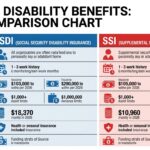
SSI is a needs-based program for people with limited income and resources who are aged, blind, or disabled. SSDI (Social Security Disability Insurance) is based on your work history and the Social Security taxes you paid. You can receive both if you qualify.
12. Who gets SSI payments on the 3rd of the month?
People who receive both Social Security and SSI, as well as people who started receiving Social Security before May 1997, get their Social Security payments on the 3rd. However, their SSI payment still comes on the 1st. These are two separate payments.
Key Takeaways
SSI payments for September 2026 are scheduled for September 1, 2026 (a Tuesday, no adjustment needed).
SSI is a needs-based program for people 65+, blind, or with disabilities with limited income and resources.
Income limits are approximately $967/month for individuals and $1,450/month for couples.
Resource limits are $2,000 for individuals and $3,000 for couples.
Benefits are issued monthly on the first of the month, with adjustments for weekends/holidays.
You must be a U.S. citizen or qualified non-citizen to qualify.
You can apply online at SSA.gov, by phone, or in person.
Processing times vary from 3-6 weeks for non-disability claims and 3-6 months for disability claims.
States may add supplementary payments; contact your state for details.
Review your eligibility annually and report changes to the SSA.
Understanding the Free Government iPhone Program The Free Government iPhone program is an initiative aimed at providing eligible individuals access to modern communication technology through the distribution of iPhones without charge. This program primarily focuses on low-income households, enabling them to stay connected with essential services, family, and friends. The primary goal is to address…
Introduction to LA Cafe Snap Login The LA Cafe Snap Login is an essential online portal that facilitates access to Louisiana’s Supplemental Nutrition Assistance Program (SNAP) benefits for its residents. This digital platform serves as a gateway for low-income families and individuals to obtain crucial assistance, effectively empowering them to manage their nutritional needs and…
How Do Insider Threat Programs Defend Against Insider Threats? Quick Answer Insider threat programs defend against insider threats by combining people, policies, and technology to deter, detect, and respond to data loss caused by trusted individuals. They integrate behavioral analytics, data loss prevention, access controls, and cross-functional teams spanning security, HR, and legal. Programs follow…
Introduction to Florida Food Stamps (SNAP) The Florida Food Stamps program, officially known as the Supplemental Nutrition Assistance Program (SNAP), serves as a vital resource for families in need. Its primary purpose is to provide nutritional support to low-income households, ensuring they have access to essential food items. The significance of the SNAP program cannot…