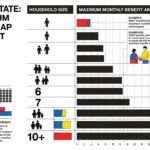
Food Assistance New York NY: Complete Guide to SNAP, EBT & Food Pantries
In New York City, food assistance is primarily provided through SNAP (Food Stamps), administered by the NYC Human Resources Administration (HRA). Apply online at myBenefits.ny.gov or ACCESS HRA, or call 718-SNAP-NOW (718-762-7669). New York uses Broad-Based Categorical Eligibility (BBCE) with gross income limits up to 200% of the Federal Poverty Level for households with elderly or disabled members. A family of four can earn up to $5,358/month and may still qualify. Benefits load onto an EBT card between the 1st and 14th of each month. Standard processing takes up to 30 days; expedited processing is available within 7 days. Emergency food is available through the Community Food Connection network of 700+ pantries and kitchens.
Quick Facts Table
Item
Information
Program
SNAP (Food Stamps in New York), TEFAP, WIC, CSFP
Agency
NYC Human Resources Administration (HRA), NYS Office of Temporary and Disability Assistance (OTDA)
Eligibility
Gross income ≤130% FPL (most households); ≤150% FPL (earned income households); ≤200% FPL (elderly/disabled members); net income ≤100% FPL; U.S. citizens and qualified immigrants
Income Limits
1 person: $1,696/mo (130% FPL) to $2,608/mo (200% FPL); 4 people: $3,483/mo (130% FPL) to $5,358/mo (200% FPL)
Monthly Benefit
Max: 1 person $298; 4 people $994; Min: $24 for 1–2 person households
Application
Online at myBenefits.ny.gov or ACCESS HRA; phone 718-SNAP-NOW (718-762-7669); in person at HRA Benefits Access Centers
Processing Time
Standard: up to 30 days; Expedited: within 7 calendar days
Renewal
Recertification required; typically every 12 months
Available States
All 50 states; New York program is called SNAP or Food Stamps
Last Updated
October 2026
What Is This Program?
SNAP (Supplemental Nutrition Assistance Program) — commonly called Food Stamps in New York — is a federal food assistance program administered by the USDA Food and Nutrition Service (FNS) and operated at the state level by the New York State Office of Temporary and Disability Assistance (OTDA), with local administration in New York City by the Human Resources Administration (HRA). It provides monthly benefits on an Electronic Benefits Transfer (EBT) card, which can be used to purchase eligible food items at authorized retailers, including grocery stores, bodegas, farmers markets, and online retailers.
In New York City and throughout New York State, SNAP is the primary government food assistance program. More than 1.8 million New York City residents receive SNAP benefits each month. The program is a critical lifeline for low-income working families, seniors, people with disabilities, and others facing food insecurity.
Beyond SNAP, New York City residents can access TEFAP (The Emergency Food Assistance Program), WIC (Women, Infants, and Children), CSFP (Commodity Supplemental Food Program for seniors), and the Community Food Connection (CFC) network, which funds more than 700 food pantries and community kitchens across the five boroughs. Major food bank partners include the Food Bank For New York City, City Harvest, and Hunger Free America.
Who Qualifies?
You may qualify for SNAP in New York City if your household meets all of the following:
Gross monthly income at or below 130% of the Federal Poverty Level (FPL) for most households; 150% FPL for households with earned income that don’t meet the 200% threshold; or 200% FPL for households with a senior (60+), a member with a disability, or out-of-pocket dependent care costs
Net monthly income (after allowable deductions) at or below 100% FPL — $2,680/month for a household of 4
Assets: No asset test for most households (New York does not count savings accounts, retirement funds, or similar resources against eligibility)
You are a U.S. citizen or a qualified non-citizen (lawful permanent resident, refugee, asylee, etc.)
You live in New York State
You meet work requirements if you are an able-bodied adult aged 18–64 without dependents under 14
Who does NOT qualify:
Households with gross income above 130% FPL (unless they qualify under the 150% or 200% FPL thresholds)
Undocumented immigrants (though their U.S. citizen children may qualify)
Most college students enrolled at least half-time who do not meet an exemption
Individuals who intentionally violated SNAP program rules (disqualified)
Striking workers
Able-bodied adults without dependents (ABAWDs) who fail to meet work requirements for more than 3 months in a 36-month period
Common exceptions:
Elderly (60+) or disabled household members: These households qualify for the 200% FPL gross income limit and may be eligible for the Elderly Simplified Application Project (ESAP) , which simplifies the application and recertification process
Households with out-of-pocket dependent care costs: Qualify for the 200% FPL gross income limit
College students: May qualify if they work at least 20 hours per week, participate in work-study, or care for a child under age 6
Pregnant individuals: Exempt from ABAWD work requirements
Homeless individuals: May qualify for expedited processing
Those receiving SSI, SSD, or VA disability: Exempt from ABAWD work requirements
Income Limits
New York has broader SNAP eligibility than many other states. Most households only need to pass a single gross income test, and the thresholds vary depending on household composition.
2026 SNAP Gross Income Limits — New York
Household Size
130% FPL (Most Households)
150% FPL (Earned Income)
200% FPL (Elderly/Disabled/Dependent Care)
Net Income Limit (100% FPL)
1 person
$1,696
$1,957
$2,608
$1,305
2 people
$2,292
$2,644
$3,525
$1,763
3 people
$2,888
$3,332
$4,442
$2,221
4 people
$3,483
$4,019
$5,358
$2,680
5 people
$4,079
$4,707
$6,275
$3,138
6 people
$4,675
$5,394
$7,192
$3,596
7 people
$5,271
$6,082
$8,108
$4,055
8 people
$5,867
$6,769
$9,025
$4,513
Each additional
+$596
+$688
+$917
+$459
Source: NYS OTDA SNAP Standards, effective October 1, 2025 through September 30, 2026
Important: For households where one member is 60 years or over, on SSI, or on Social Security Disability, the 130% and 150% gross income limits do not apply. These households are subject only to the net income limits (100% FPL).
Allowable Deductions
Several deductions can reduce your countable income before the net income test is applied:
Standard deduction (varies by household size)
Earned income deduction — 20% of earned income
Dependent care deduction — actual costs for child care or care of a disabled adult
Excess shelter deduction — rent/mortgage plus utilities exceeding 50% of income after other deductions
Medical expenses — for elderly (60+) or disabled household members, amounts over $35/month
Child support payments — court-ordered payments made to a non-household member
Asset Limits
New York does not have an asset test for most SNAP households. Savings accounts, retirement funds, and similar resources are generally not counted against eligibility. This is one of the most generous asset policies in the country and removes a significant barrier for families with modest savings or retirement accounts.
For the small number of households subject to asset limits (primarily those not categorically eligible and not containing elderly or disabled members), the limits are:
$3,000 for most households
$4,500 for households with at least one member who is 60+ or disabled
Household Requirements
SNAP defines a “household” as people who live together and buy and prepare food together. This is different from a tax household or a family.
Who counts as a household member:
You
Your spouse
Children under 22 living with you
Anyone you live with and share food with
Elderly adults (60+) and people with disabilities who share food resources
Tenants renting a room who buy and prepare their own food
Adult children (22+) who buy and prepare their own food
Roommates who purchase and cook separately
Citizenship Rules
SNAP eligibility is limited by federal law to:
U.S. citizens
U.S. nationals
Qualified non-citizens, which include:
Lawful permanent residents (green card holders)
Refugees
Asylees
Deportation withheld individuals
Cuban/Haitian entrants
Battered spouses/children with certain petitions
Certain veterans and active-duty service members
Victims of severe trafficking
Undocumented immigrants are not eligible for SNAP, but their U.S. citizen children may qualify. The parent’s immigration status does not disqualify the child if the child meets citizenship requirements. You do not have to give your citizenship or immigration status to get benefits for your children who are U.S. citizens or legal immigrants.
Immigration Eligibility
For qualified immigrants, there may be a 5-year waiting period before eligibility. However, this waiting period does not apply to:
Refugees
Asylees
Deportation withheld individuals
Cuban/Haitian entrants
Certain veterans
Trafficking victims
Children under 18
Individuals receiving disability benefits regardless of when they entered the country
Mixed-status households: If some household members are eligible and others are not, the eligible members can receive SNAP. For example, a U.S. citizen child and a lawful permanent resident parent may qualify, while an undocumented parent cannot.
Important: Receipt of SNAP benefits does not place an immigrant at risk of becoming a public charge. SNAP is excluded from public charge determinations.
State Differences
SNAP is a federal program with state-level administration. New York’s key differences from other states:
NYC: 1st–14th (13 days); Upstate: 1st–9th by case number
Varies by state
Online purchasing
Available at Amazon, Walmart, etc.
Optional for states
Restaurant Meals Program
Available for elderly, disabled, homeless
Optional for states
Elderly Simplified Application
ESAP available for 60+ households
Optional for states
Comparison with neighboring states:
State
Gross Income Limit
Asset Limit
Program Name
New York
130%–200% FPL
None (most)
SNAP
New Jersey
185% FPL (BBCE)
None (BBCE)
SNAP
Connecticut
185% FPL (BBCE)
None (BBCE)
SNAP
Pennsylvania
160% FPL (BBCE)
None (BBCE)
SNAP
Required Documents
Required documents may include:
Proof of citizenship and identity for everyone applying (birth certificate, passport, driver’s license, state ID, Social Security card)
Alien Registration Cards (green cards) for non-citizens
Social Security numbers for everyone, or proof a number has been applied for
Proof of relationship (birth certificates for children)
Proof of ALL money received last month and this month (pay stubs, award letters, unemployment statements)
Proof that employment ended and last date paid (if recently unemployed)
Bank or credit union complete statement for most recent month
Proof of savings bonds, securities, retirement plans, and life insurance
Proof of rent/mortgage
Proof of utility bills (electric, water, gas) for most recent month
Proof of child care expenses for most recent month
Proof of medical expenses for those 60+ or receiving disability benefits if total household medical costs exceed $35/month
Proof of legal obligation and payments of court-ordered child support
How to Apply
There are three ways to apply for SNAP in New York City:
1. Apply Online (Fastest Method)
Visit myBenefits.ny.gov or ACCESS HRA (access.nyc.gov) to submit your application. The ACCESS HRA website and mobile app are available 24/7 and allow you to apply or recertify for SNAP from anywhere.
2. Apply by Phone
Call 718-SNAP-NOW (718-762-7669) for an on-demand SNAP interview. No appointment is necessary. You can also call the HRA Infoline at 718-557-1399.
3. Apply in Person
Visit an HRA Benefits Access Center. Use the ACCESS HRA website or call 311 to find the nearest location.
Step-by-Step Application Process
Gather your documents (see Required Documents section above)
Submit your application online, by phone, or in person
Complete an eligibility interview — HRA staff will conduct an interview to verify information. Complete the interview within 7 days of filing your application to be eligible for expedited benefits.
Provide verification documents — HRA will review your documents and may request additional information
Receive a decision — within 30 days for standard processing, or 7 days for expedited
Receive your EBT card — mailed to you after approval, typically within 5 business days
Online Application
myBenefits.ny.gov and ACCESS HRA are New York’s integrated online application systems for SNAP, cash assistance, Medicaid, and other benefits.
What you can do online:
Submit a new SNAP application
Renew your benefits (recertification)
Report changes (income, household size, address)
Upload verification documents
Check your case status and benefit amounts
View notices and proof of eligibility
Freeze your EBT card when not in use
Access the ABAWD exemption checker
Processing Time
Standard processing: Up to 30 days from the date you submit your complete application.
Expedited processing: Benefits can be received within 7 calendar days if you meet certain criteria. The interview must be completed within 7 days of filing your application to be eligible for expedited benefits.
You may qualify for expedited processing if:
Your household’s gross monthly income is less than $150 and your liquid resources are $100 or less
Your household’s combined gross income plus liquid resources are less than your monthly rent/mortgage plus utilities
You are a homeless individual or a migrant/seasonal farmworker with very low income
New York’s FY 2025 SNAP application processing timeliness rate was 84.86% . A landmark settlement in December 2025 requires the City to meet clear benchmarks for processing applications and renewals on time.
Payment Schedule
SNAP benefits load onto your New York EBT Card each month. The schedule varies by location:
New York City (all five boroughs): Benefit postings are spread out over 13 different days that are not Sundays or holidays, during the first two weeks of each month. The actual dates change from one month to the next, and NYC publishes a six-month schedule showing the exact availability dates. This is based on the last digit of your case number.
Upstate New York (all counties outside NYC): Benefits are made available based on the last digit of your case number during the first nine days of each month:
Case Number Ends In
Benefit Available On
0 or 1
1st of the month
2
2nd of the month
3
3rd of the month
4
4th of the month
5
5th of the month
6
6th of the month
7
7th of the month
8
8th of the month
9
9th of the month
Source: USDA FNS Monthly Issuance Schedule
You can check your balance by calling the number on the back of your EBT card or visiting the ebtEDGE website.
Renewal Process
SNAP benefits require recertification (renewal) to continue. The renewal period is typically every 12 months.
How to renew:
Watch for your renewal notice in the mail or on ACCESS HRA
Complete the renewal form and submit it before the deadline
Provide updated verification documents (pay stubs, utility bills, rent receipts)
Complete any required interview
Receive a new approval notice with your updated benefit amount
Important: If you miss your renewal deadline, your benefits will stop. You can recertify online through ACCESS NYC or the ACCESS HRA mobile app.
Elderly Simplified Application Project (ESAP): Households where all members are 60+ and have no earned income may qualify for a simplified application and recertification process. Contact HRA for details.
Reasons Applications Are Denied
Common reasons for SNAP denial in New York City:
Income too high — Gross income exceeds the applicable FPL limit
Incomplete application — Missing information or documents
Missed interview — Failure to complete the required eligibility interview
Citizenship/immigration status — Not a U.S. citizen or qualified non-citizen
Student status — Enrolled at least half-time without qualifying exemption
ABAWD work requirement — Able-bodied adults without dependents failing to meet work requirements
Failure to provide verification — HRA cannot verify income, household size, or other factors
Request a fair hearing — You must request within 90 days of the notice date
Submit your request — You can request online at FairHearing.ny.gov, by phone, by mail, or in person
Continue receiving benefits — If you appeal before your benefits stop, you may continue receiving benefits at the prior level until the hearing decision
Attend the hearing — You can present evidence, bring witnesses, and have a representative (including an attorney)
Receive a decision — The hearing officer will issue a written decision
Free legal help: Legal Services NYC (917-661-4500), Legal Aid Society, NYLAG, and other organizations provide free representation for SNAP appeals.
Fair Hearing Help NY offers free legal resources and support for New Yorkers navigating the fair hearing process.
Common Mistakes
Not applying because you think you earn too much — New York’s 200% FPL limit for households with elderly or disabled members means many working families qualify who assume they don’t
Forgetting to report changes — You must report changes in income, household size, address, or expenses within 10 days
Missing the renewal deadline — Mark your calendar and submit renewal paperwork early
Not completing the interview — The eligibility interview is mandatory; missing it can delay or deny your application
Failing to provide all required documents — You must provide actual documentation
Incorrect household size — Including or excluding the wrong people can lead to denial or overpayment
Not reporting all income — Including gig work, self-employment, and cash assistance
Assuming you’re ineligible as a student — Many students qualify through exemptions
Not applying for expedited processing — If you’re in crisis, ask about expedited benefits
Giving up after denial — You can appeal, reapply, or seek help from community organizations
Expanded work requirements: Starting March 1, 2026, Able-Bodied Adults Without Dependents (ABAWDs) aged 18–64 must document 80 hours/month of work, education, or volunteering to maintain SNAP benefits beyond 3 months in a 3-year period.
Increased state administrative costs: H.R. 1 increases the local share of SNAP administrative costs from 50% to 75%, creating an estimated $100 million gap for HRA.
Stricter error rate penalties: States with payment error rates above 6% face financial penalties
Immigration enforcement data sharing: Personal information may be disclosed for immigration enforcement purposes
Impact in New York: More than 300,000 New York households could potentially lose some or all of their SNAP benefits under the new work requirements and eligibility changes.
City Response: Mayor Mamdani launched a citywide outreach campaign to help New Yorkers who lost benefits under new federal work requirements reapply as they become eligible beginning October 1, 2026. Through an unprecedented interagency response, the City reduced by 65% the number of New Yorkers projected to lose benefits.
Summer EBT: Governor Hochul highlighted the distribution of more than $216 million in food assistance to more than 1.8 million children across New York through the Summer EBT program.
Practical Examples: Who Qualifies?
Example 1: Family of 4 Earning $42,000/Year
Monthly gross income: $3,500
130% FPL for 4 people: $3,483/month
150% FPL for 4 people: $4,019/month
Result: Likely qualifies — Gross income exceeds 130% FPL but is below 150% FPL. If the household has earned income and doesn’t meet the 200% threshold, they may still qualify under the 150% FPL limit. Net income after deductions would likely be below $2,680.
Example 2: Senior Receiving SSI
Monthly income: $943 (2026 SSI federal benefit rate)
Household size: 1
200% FPL for 1 person: $2,608/month
Result: Qualifies — As an SSI recipient, the 130% and 150% gross income limits do not apply. Only the net income limit ($1,305) applies. Income is well below the limit. May also qualify for the Elderly Simplified Application Project (ESAP).
Example 3: Disabled Worker Receiving SSDI
Monthly SSDI: $1,800
Household size: 1
200% FPL gross income limit: $2,608/month
Result: May qualify — As a disabled individual, the 130% and 150% gross income limits do not apply. Only the net income limit applies. May have uncapped shelter and medical deductions that reduce net income, potentially increasing benefits.
Example 4: College Student
Part-time job earning $1,200/month
Enrolled half-time
Household size: 1
Result: May qualify — College students may qualify if they work at least 20 hours per week, participate in work-study, or care for a child under age 6. If working 20+ hours/week, this student would meet the exemption.
Example 5: Single Mother with 2 Children
Earns $2,800/month
Pays $1,300 rent + $250 utilities
130% FPL for 3 people: $2,888/month
Result: Likely qualifies — Gross income is just below the 130% FPL limit. After excess shelter deduction and Standard Utility Allowance, net income would be low. May qualify for $300–$500/month in SNAP benefits.
Example 6: Veteran with Disability
VA disability compensation: $1,500/month
Household size: 1
Result: Likely qualifies — As a disabled veteran, the 130% and 150% gross income limits do not apply. Only the net income limit applies. May qualify for uncapped shelter and medical deductions.
Example 7: Retired Couple
Social Security: $2,400/month combined
Household size: 2
200% FPL: $3,525/month
Result: May qualify — Gross income below the 200% FPL limit for elderly households. After deductions for rent, utilities, and medical expenses (both 60+), net income may be low enough. May qualify for ESAP.
1. What is the income limit for food stamps in New York City? For a household of 4, the gross monthly income limit is $3,483 (130% FPL) for most households, $4,019 (150% FPL) for households with earned income, and $5,358 (200% FPL) for households with elderly or disabled members. The net income limit is $2,680. Limits update every October.
2. How much money will I get on my EBT card in New York? Maximum monthly benefits are $298 for 1 person, $546 for 2, $785 for 3, and $994 for 4. Your actual amount depends on net income — every dollar of net income reduces benefits by 30 cents. Minimum benefit for 1–2 person households is $24.
3. How do I apply for SNAP in New York City? Apply online at myBenefits.ny.gov or ACCESS HRA, call 718-SNAP-NOW (718-762-7669) for an on-demand interview, or visit an HRA Benefits Access Center. You’ll need proof of identity, citizenship, income, rent/mortgage, and utility bills. Standard processing takes 30 days; expedited is 7 days.
4. What can I buy with my New York EBT card? SNAP benefits can purchase breads, cereals, fruits, vegetables, meats, fish, poultry, dairy products, and seeds/plants that produce food. You cannot buy hot prepared foods, alcohol, tobacco, pet food, household supplies, or vitamins. The Restaurant Meals Program allows certain participants to buy prepared meals at participating restaurants.
5. Can I use my EBT card online? Yes. New York SNAP benefits work with approved online retailers including Amazon, Walmart, and other USDA-authorized online grocery stores. You can also use your EBT card at farmers markets.
6. How long does it take to get SNAP benefits in New York? Standard processing takes up to 30 days. If you qualify for expedited processing, benefits can be received within 7 calendar days. Complete your interview within 7 days of filing to be eligible for expedited benefits.
7. What if I’m denied SNAP benefits? You have the right to appeal within 90 days by requesting a fair hearing. You may also reapply if your circumstances change. Legal Services NYC (917-661-4500), Legal Aid Society, and NYLAG provide free help with appeals.
8. Do I have to be a U.S. citizen to get food stamps? You must be a U.S. citizen, U.S. national, or qualified non-citizen. Undocumented immigrants cannot receive SNAP, but their U.S. citizen children can. SNAP is excluded from public charge determinations.
9. Can college students get food stamps in New York? College students may qualify if they work at least 20 hours per week, participate in work-study, or care for a child under age 6. Other exemptions include receiving TANF, being physically or mentally unable to work, or being enrolled in certain programs.
10. What are the ABAWD work requirements in New York? Starting March 1, 2026, Able-Bodied Adults Without Dependents (ABAWDs) aged 18–64 must document 80 hours/month of work, education, or volunteering to maintain SNAP benefits beyond 3 months in a 3-year period. Exemptions include receiving disability benefits, being pregnant, caring for a child under 14, or having a physical/mental health condition preventing work.
11. How do I find a food pantry near me in New York City? Call 311 or visit FoodHelp.nyc to find nearby food pantries and community kitchens. The Community Food Connection (CFC) network funds more than 700 pantries and kitchens across the city. Some pantries require ID and proof of address; others ask only for a name and household size.
12. What is the Restaurant Meals Program? This program allows certain SNAP participants — those who are elderly (60+), disabled, or homeless — to use their EBT card to purchase prepared meals at participating restaurants. Contact HRA for details.
13. Can I get food assistance if I’m homeless? Yes. Homeless individuals may qualify for SNAP and expedited processing. You can apply without a fixed address. Note that homeless individuals are among those who must meet or be exempt from ABAWD work requirements.
14. What is TEFAP and how do I get it? TEFAP (The Emergency Food Assistance Program) provides free emergency food boxes through local food banks and pantries. New York’s TEFAP income limit is 225% FPL. The Food Bank For New York City administers TEFAP for the five boroughs. Call 311 or visit FoodHelp.nyc to find locations.
15. What is the Community Food Connection (CFC)? CFC is New York City’s primary funding stream for emergency food providers, administered through HRA. It supports more than 700 food pantries and soup kitchens across the city. Call 311 or visit FoodHelp.nyc to find a location near you.
Key Takeaways
SNAP (Food Stamps) is New York City’s primary food assistance program, administered by HRA and funded by USDA. Apply online at myBenefits.ny.gov or ACCESS HRA, or call 718-SNAP-NOW.
New York has broader eligibility than many states, with gross income limits of 130% FPL for most households, 150% FPL for households with earned income, and 200% FPL for households with elderly or disabled members — a family of 4 can earn up to $5,358/month and still qualify.
No asset test applies for most households — savings accounts and retirement funds are generally not counted against eligibility.
Maximum monthly benefits are $298 for 1 person, $546 for 2, $785 for 3, and $994 for 4. Minimum benefit is $24 for 1–2 person households.
Processing takes up to 30 days for standard applications; expedited processing is available within 7 days for those in crisis. Complete your interview within 7 days of filing to be eligible for expedited benefits.
Benefits load onto a New York EBT Card — NYC postings are spread over 13 days in the first two weeks of the month; upstate postings occur during the first 9 days.
New ABAWD work requirements effective March 1, 2026, require able-bodied adults aged 18–64 without dependents under 14 to document 80 hours/month of work, education, or volunteering.
H.R. 1 increased local SNAP administrative costs from 50% to 75%, creating an estimated $100 million gap for HRA, and more than 300,000 New York households could potentially lose benefits.
TEFAP provides emergency food boxes through the Food Bank For New York City and other regional food banks. The CFC network funds 700+ pantries and community kitchens across NYC.
Free help is available through 311, FoodHelp.nyc, Legal Services NYC (917-661-4500), Fair Hearing Help NY, and HRA Benefits Access Centers.
Official Government Resources
NYC Human Resources Administration (HRA) — nyc.gov/hra
1. TANF (Temporary Assistance for Needy Families) — Cash assistance for families with children. Apply through ACCESS HRA or myBenefits.ny.gov. New York’s program provides monthly cash benefits and requires work participation.
2. Medicaid/Health Insurance — New York’s Medicaid program provides free or low-cost health insurance. Apply through ACCESS HRA or myBenefits.ny.gov. Many SNAP recipients qualify.
3. HEAP (Home Energy Assistance Program) — Helps pay heating and cooling bills. New York’s LIHEAP program provides heating benefits from $21 to $996 and cooling benefits from $10 to $1,000. Apply through ACCESS HRA or your local Department of Social Services.
4. WIC (Women, Infants, and Children) — Food vouchers for pregnant women, new mothers, infants, and children under 5. Automatic eligibility if receiving Medicaid, SNAP, or TANF. Call 1-800-522-5006.
5. Section 8 Housing Choice Voucher — Rental assistance through HUD. Waiting lists may be open through the NYC Department of Housing Preservation and Development (HPD) or NYCHA.
6. Child Tax Credit — Up to $2,000 per qualifying child. Claim through IRS when filing taxes.
7. Earned Income Tax Credit (EITC) — Refundable tax credit for working families. Claim through IRS. Can be worth up to $7,830 for families with 3+ children.
8. SSI (Supplemental Security Income) — Monthly cash assistance for aged, blind, or disabled individuals with limited income. Apply through SSA.
9. SSDI (Social Security Disability Insurance) — Monthly benefits for disabled workers who have worked and paid Social Security taxes. Apply through SSA.
10. CSFP (Commodity Supplemental Food Program) — Monthly food boxes for seniors 60+ with income at or below 130% FPL. Available through local food banks.
11. Summer EBT — Provides $120 in extra food assistance for children during the summer months. More than 1.8 million children across New York received Summer EBT in 2026.
12. Restaurant Meals Program — Allows elderly, disabled, and homeless SNAP recipients to use EBT cards for prepared meals at participating restaurants.